Power Distribution
Cord Sets
Flexible cord sets and cordsets with factory-molded plugs and connectors, available in straight, retractile, and shielded configurations, built to your specification in Branford, Connecticut.

Flexible cord sets and cordsets with factory-molded plugs and connectors, available in straight, retractile, and shielded configurations, built to your specification in Branford, Connecticut.
A cord set is a complete power cord assembly: a length of flexible cord with an attachment plug on one end and a connector or terminated ends on the other, assembled and tested as a finished unit. Autac manufactures cord sets in straight, retractile, and shielded configurations, across a wide range of plug types, wire gauges, and lengths.
Factory-terminated with molded plugs, so no field wiring is required.
Cord sets meet rigorous UL and CUL safety standards for commercial and industrial use.
Any gauge, length, plug type, material, and color combination to match your spec.
Assembled in Branford, CT with rigorous quality control on every unit.
These are the same product. Cordset as one word is what you will usually find in purchasing systems, ERP part databases, and industrial distributor catalogs. Cord set as two words is the form used in UL standards and in the National Electrical Code. Cord-set, power cord assembly, and line cord all describe the same finished assembly. Autac uses the spellings interchangeably, and a request for cordsets and a request for cord sets reach the same engineers.
What actually distinguishes a cord set from other cable products is that it ships as a finished, tested unit. Bulk cable is sold by the foot and terminated on site by an electrician or a panel builder. A cord set arrives with its terminations already applied, strain relief already molded, and continuity already verified at the factory. That difference is why cord sets carry their own UL listing as an assembly rather than inheriting the listing of the cable inside them.
The two terms overlap and are often used loosely. In practice, a cord set carries power and terminates in a standard attachment plug intended for a receptacle. A cable assembly is the broader category, covering signal, data, and control harnesses that may terminate in circular connectors, ribbon headers, or custom backshells and may never touch line voltage. Autac builds both, but the distinction matters when you specify a listing: cord sets are evaluated under UL 817, while a signal harness is typically evaluated as a component of the equipment it serves.
Flexible cord sets get their flexibility from conductor stranding and jacket compound, not from wire gauge. Building wire in 18 AWG typically uses 7 relatively coarse strands. The same 18 AWG conductor in a flexible cord set uses 41, 65, or 105 fine strands. More strands of smaller diameter means each individual strand bends through a gentler radius, so the conductor survives far more flex cycles before any strand fatigues and breaks.
Jacket compound matters just as much. Standard PVC stiffens noticeably as temperature drops and becomes difficult to handle below freezing. TPE and TPR stay pliable well below zero and recover their shape after being compressed or coiled. For an assembly that will be dragged across a floor, wound onto a reel, or flexed by a moving machine axis thousands of times, the combination of fine stranding and an elastomeric jacket determines service life more than any other line on the specification.
Where an application demands more flex life than any straight cord can deliver, the answer is usually a retractile cord set, which distributes bending stress along the entire helix instead of concentrating it at one or two fixed bend points.
Autac builds cord sets for power, signal, and data applications. Choose a standard configuration or tell us your requirements.
Coiled power cord assemblies that extend and retract, keeping workspaces tangle-free.
Standard non-coiled power cord assemblies with molded plugs for fixed installations.
EMI-protected cord assemblies for sensitive electronic and medical equipment.
Every cord set is defined by what sits on each end of it. The supply end almost always carries a NEMA straight-blade attachment plug sized to the receptacle it will meet. The equipment end is where the choices open up, and it is where most specification errors happen. Getting the pair right the first time is usually a matter of matching three things: voltage, current, and whether the equipment end needs to be detachable.
| Termination | Rating | Typical use |
|---|---|---|
NEMA 1-15P | 125V, 15A, 2-wire | Ungrounded light-duty appliance and lamp cord sets |
NEMA 5-15P | 125V, 15A, grounded | The standard grounded North American plug |
NEMA 5-20P | 125V, 20A, grounded | Higher-draw equipment on dedicated 20A circuits |
NEMA 6-15P | 250V, 15A, grounded | 240V industrial and commercial equipment |
NEMA 6-20P | 250V, 20A, grounded | 240V equipment with higher current draw |
Hospital Grade | 125V or 250V | Green-dot plugs meeting UL 498 supplement requirements |
IEC C13 | 250V, 10A | The most common detachable equipment inlet |
IEC C15 | 250V, 10A, 120°C | Heated equipment, kettles, lab instruments |
IEC C19 | 250V, 16A | Servers, racks, and higher-current equipment |
Stripped & tinned | Per cable | Hardwired into terminal blocks inside equipment |
Ring / spade | Per cable | Screw-terminal connections and grounding points |
DIN / circular | Per connector | Signal, control, and instrumentation assemblies |
A molded termination is formed around the conductors and the jacket in a single shot, producing a sealed, strain-relieved end that cannot be opened. It is the stronger and more repeatable choice, and it is what we recommend for anything that will be handled regularly or exposed to moisture. A field-wireable plug is assembled from a shell and screw terminals and can be replaced on site, which is worth the tradeoff when cords are cut to length during installation or when a facility wants to service its own cables.
If your equipment uses a connector we do not stock, send us the part and we will build the assembly around it. Customer-supplied connectors are routine, and they are frequently the fastest route to a qualified assembly when the connector is already approved elsewhere in your product.
From hospital equipment to factory floors, Autac cord sets power critical equipment across every industry.
Terminated, strain relieved, and installed on the equipment they were built for. All manufactured in Branford, Connecticut.
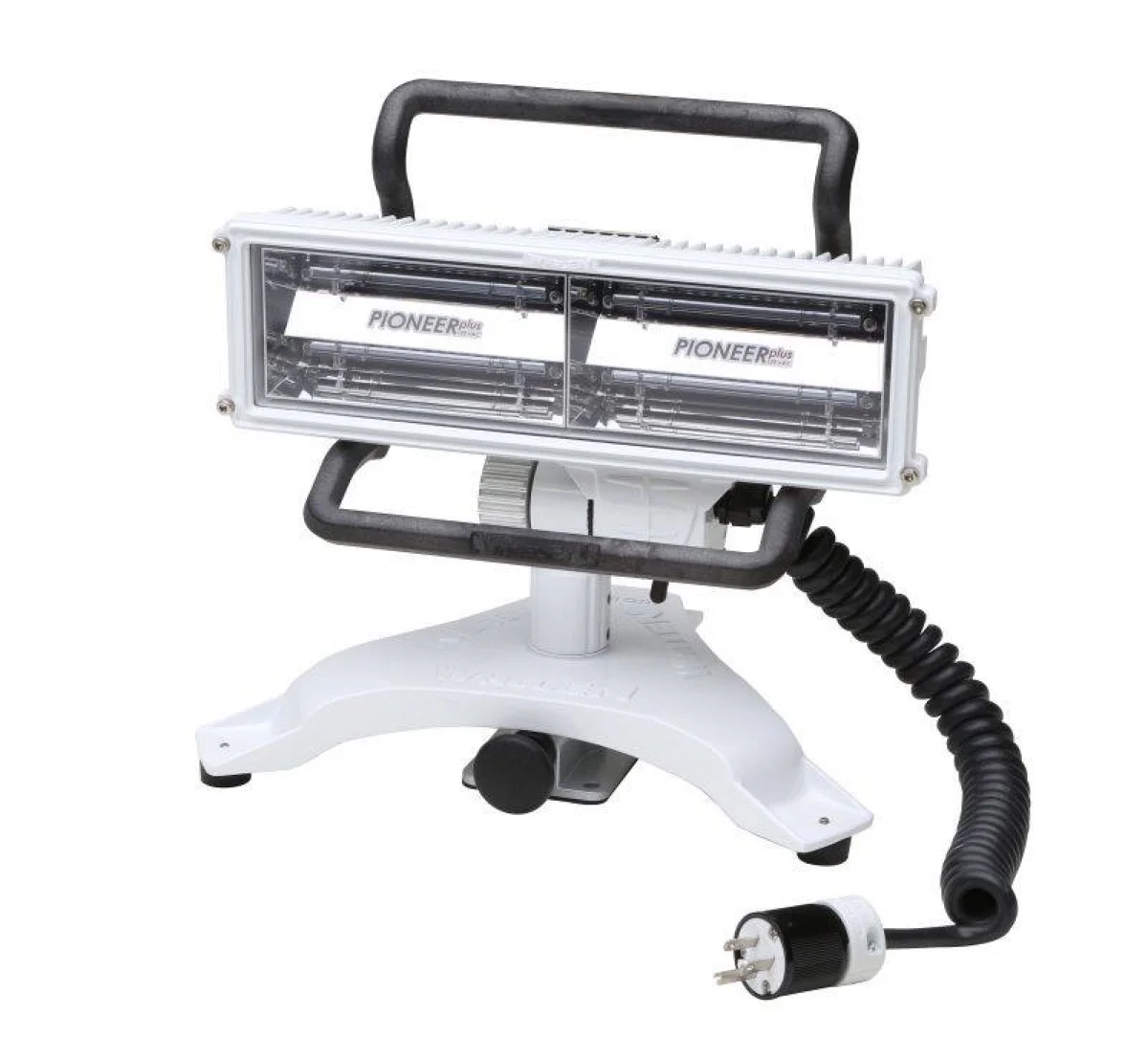
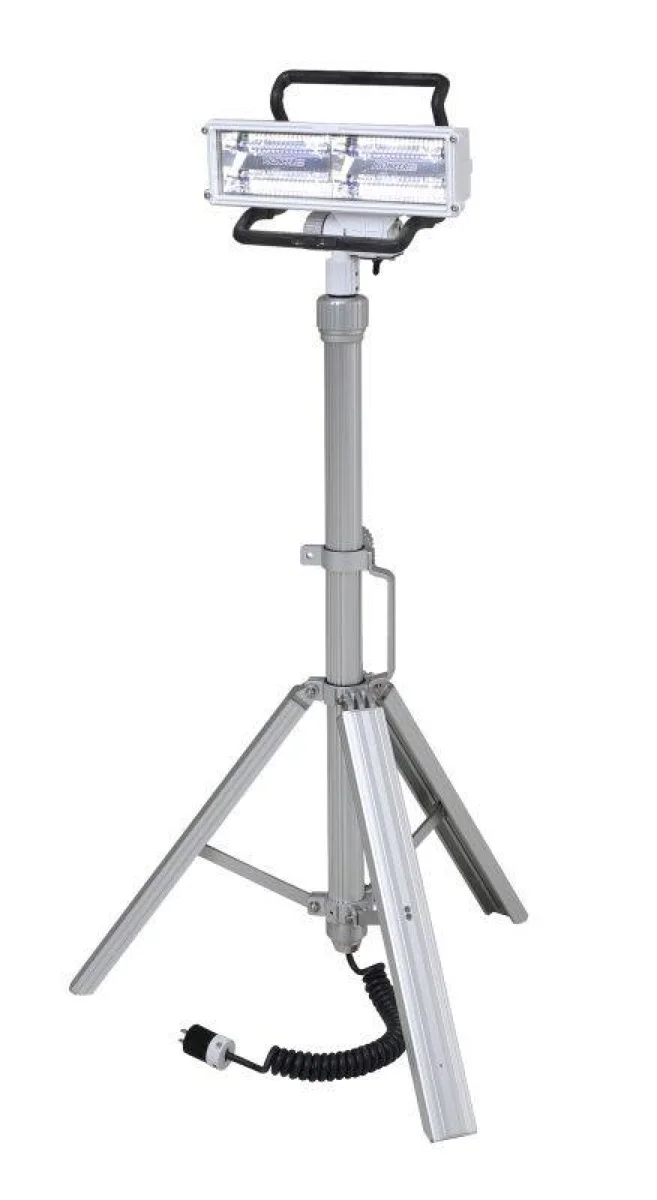

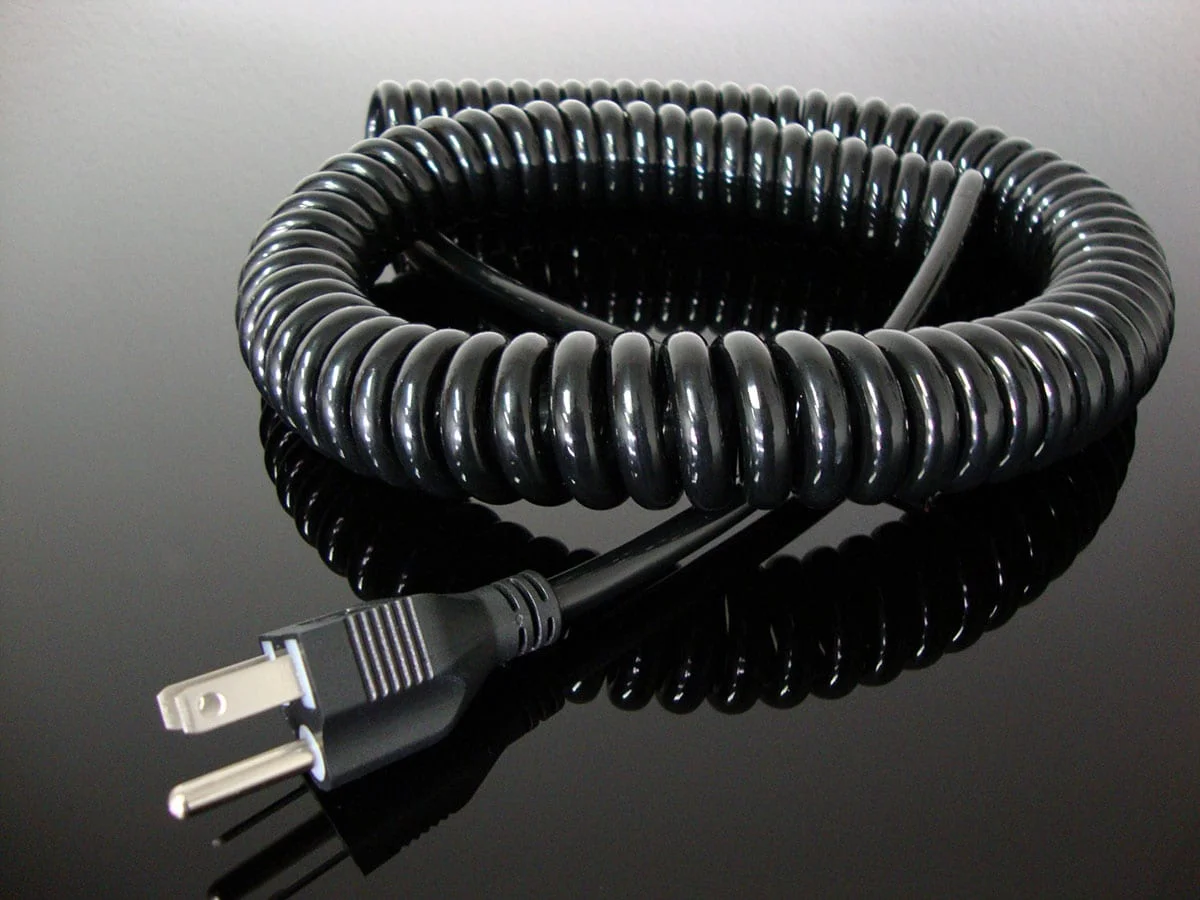
Every cord set is built to order. Below are the standard specification ranges, with custom options available on request.
Every Autac cord set starts from one of the cable platforms below. Pick the platform that matches your electrical and environmental requirements, tell us the terminations you need on each end, and we build the assembly to that spec. All 112 stock catalog numbers are listed here; custom constructions are built to print with no minimum order quantity.
| Platform | Conductor | Insulation | Jacket | Shielding | Listing | Stock Cat. Nos. |
|---|---|---|---|---|---|---|
| TPE Power Cords | Soft bare copper | TPE | TPR | Unshielded | UL/cUL Listed | 72180, 72180W, 72181, 73180, 73181, 73182, 74181, 75181, 77181, 77182, 710182 |
| TPR Power Cords | Soft bare copper | TPE | TPR | Unshielded | UL/cUL Listed | 72161, 73161, 73162, 74161, 74162, 75162, 76162, 77162, 78162, 73141, 73142, 74142, 75141, 77142, 72121, 73122, 74122 |
| PVC Power Cords | Soft bare copper | PVC | PVC | Unshielded | UL/cUL Listed | 92180, 92180W, 92181, 92181W, 93180, 93180W, 93181, 93181W, 94181, 94181W, 95181, 95181W, 92161, 92161W, 93161, 93161W, 94161, 94161W, 93141, 93141W, 93121, 93121W |
| TPE Power Cords (TPE Jacket) | Soft bare copper | TPE | TPE | Unshielded | UL/cUL Listed | 92180E, 92181E, 93180E, 93181E, 94181E, 92161E, 93161E, 94161E, 93141E |
| Communications & Electronic Control Cords | Soft tinned copper | Polypropylene | PVC or Auta-Prene TPE | Unshielded | UL Recognized AWM (cUL available) | 22235P, 22237P, 23235P, 23237P, 24235P, 24237P, 25235P, 25237P, 26235P, 26237P, 27235P, 27237P, 28235P, 28237P, 210235P, 210237P, 212235P, 212237P, 215235P, 215237P |
| Auta-Prene Test Leads | Soft tinned copper | TPE | Auta-Prene TPE | Unshielded | UL Recognized | 91207, 91208R |
| PVC or Auta-Prene Shielded Cords | Soft tinned copper | Polypropylene | PVC or Auta-Prene TPE | Shielded | UL Recognized AWM (cUL available) | 31235P, 31237P, 32235P, 32237P, 33235P, 33237P, 34235P, 34237P |
| PVC Shielded Cords | Soft tinned copper | Polypropylene | PVC | Shielded | UL Recognized AWM (CSA available) | 62235P, 63235P, 64235P, 65235P, 66235P, 67235P, 68235P |
| PVC Miniature Cords | Soft tinned copper | Polypropylene | PVC | Unshielded | UL Recognized AWM (cUL available) | 22285P, 23285P, 24285P, 25285P, 26285P, 27285P, 28285P, 210285P |
| PVC Miniature Cords with Foil Shield | Soft tinned copper | Polypropylene | PVC | Shielded | UL Recognized AWM (cUL available) | 82285P, 83285P, 84285P, 85285P, 86285P, 87285P, 88285P, 810285P |
Retracted lengths, conductor counts, and amp ratings for each catalog number are listed on the retractile cords, coiled cords, and curly cords pages.
A complete cord set specification comes down to seven decisions. Send us these and we can quote without a back-and-forth; send us fewer and we will fill the gaps with questions.
Start with the load, not the cord. The equipment nameplate gives you current draw and voltage, and those two numbers set the minimum conductor gauge and the plug configuration. Sizing up a gauge costs little and buys margin; sizing down to save money is where cord sets overheat.
Two conductors for ungrounded loads, three for grounded single-phase, four or five for three-phase. Add conductors for any signal, control, or sense lines that need to run alongside the power in the same jacket.
For a straight cord set, specify overall finished length including the plugs. For a retractile cord set, specify the retracted length; the working extension is roughly five times that, so a 10-inch retracted cord reaches about 50 inches. Getting this backwards is the single most common specification error we see.
PVC is economical and adequate indoors at room temperature. TPE and TPR cost more and earn it wherever the assembly sees cold, oil, abrasion, or constant motion. Neoprene handles the harshest industrial environments. If the cord set will be coiled or flexed repeatedly, this choice matters more than any other.
Name the plug and the connector explicitly, using the NEMA or IEC designation where one exists. If either end is a customer-supplied or unusual connector, say so up front so we can confirm we can mold or attach to it.
Required whenever the assembly runs near sensitive electronics or carries signal alongside power. Spiral serve shielding stays flexible and suits moving assemblies; braided shielding gives better coverage where flex life matters less; foil with a drain wire is the lightest option for signal work.
State whether you need UL Listed, UL Recognized, CSA, or RoHS compliance. A UL Listed cord set is certified as a finished assembly, which is not the same as an assembly built from listed parts. If the cord set will become a component inside your own listed product, UL Recognized is usually the correct and less expensive path.
Once you have those seven, the quote form captures them in order, or the cord configurator walks through them step by step. If your requirement does not fit a standard configuration, call 800-243-3161 and talk it through with an engineer.
Tell us your plug type, gauge, length, and material, and we'll build it to spec.
Request a quote on any cord set configuration, or tell us your specs and we'll build it custom.